Thursday, August 30, 2012

Song for Holden Caulfield

Writing about The Catcher in the Rye is a suicidal note.
But let the passion take over the masochism for a while. Because Salinger brings you back to the old school version of you, and Holden peeps out every now and then; never to be forgotten and never to grow out.
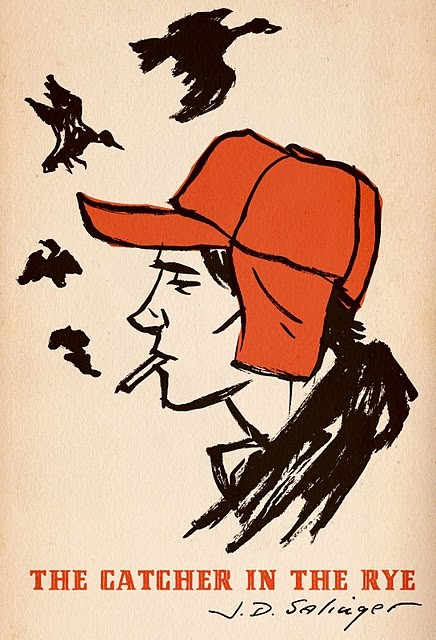
I've been trying for a while to continue writing this post, but something keeps me from summarising a masterpiece into a banal bunch of words. I might call this lack of self-confidence, shame or repulsion, but probably it's just what something this big can naturally haunt you with.
Because Holden's story might as well be everyone's story. A ritual of passage through the rye grass of life, adulthood and conscience.
I was 19 when I first read this novel, and someone told me that if you're older you're less likely to be impressed by the book. What I actually think is that there are several levels in everything we do, and thus several things to keep with you. The Catcher in the Rye is not children literature, it's not a bildungsroman; it is, instead, a stream of emotions and sensations we all feel during the course of our lives. And not only did Salinger give shape to what we feel all the time but never had the strength to forge, but he even antropomorphised it. In a shocking, uncompromising way. In a way that only Holden's words can truthfully explain:
"What really knocks me out is a book that, when you're all done reading it, you wish the author that wrote it was a terrific friend of yours and you could call him up on the phone whenever you felt like it. That doesn't happen much, though."
And Holden is not a kid. Because there's no age that life can defeat of lock up. You can read the book at any age, you can read it at any level, but there is no age without sensations. And that's what makes this masterpiece a timeless, ageless, spotless journey.


And, I dare say, there's no heart within a person who hasn't cried to that tiny little moment between Holden and Phoebe, those minutes of epiphany of the soul.
"I felt so damn happy all of a sudden, the way old Phoebe kept going around and around. I was damn near bawling, I felt so damn happy, if you want to know the truth. I don't know why. It was just that she looked so damn nice, the way she kept going around and around, in her blue coat and all. God, I wish you could've been there."

Friday, August 24, 2012

Ten pairs of shoes you should never date

Taking a piece of inspiration from the brand new trend of making lists, I thereby pronounce myself eager to fill in another one.
I have no intention of offending anyone, but well--if you feel offended, answer your own question. In fact it might look like I'm being mean, but I'm just drawn that way. (YES, I'M MEAN)

10. The cowboy boots


Okay, anyone in the world should seriously reconsider the barefoot style instead of this, because there MUST be something wrong with those who do like these shoes. And this should be taken as a sign. Especially if you're not riding a bull. And if you are, well maybe one ranch stand?

9. New Rock


The Eighties are long gone, but some happily disturbed people just like to be heavy in every sense of the word. The metalhead who wears this piece of art can be recognised by the zombie-style walk, every night I'm shuffling!

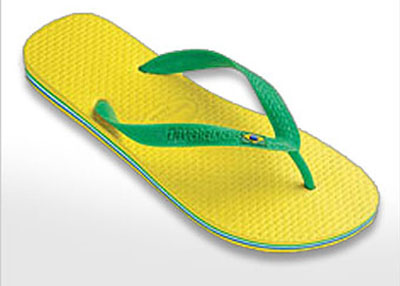
8. Flip-flops


A real threat to humanity, it's apparently impossible to tell a green field from a cold steel rail California from Milan, that's why all these people are confused about it! Therefore my piece of advice is: "help a confused Californian--take him to the seaside". At least we won't hear him dragging those rubbers, causing Panic! on the streets of Londoooon...

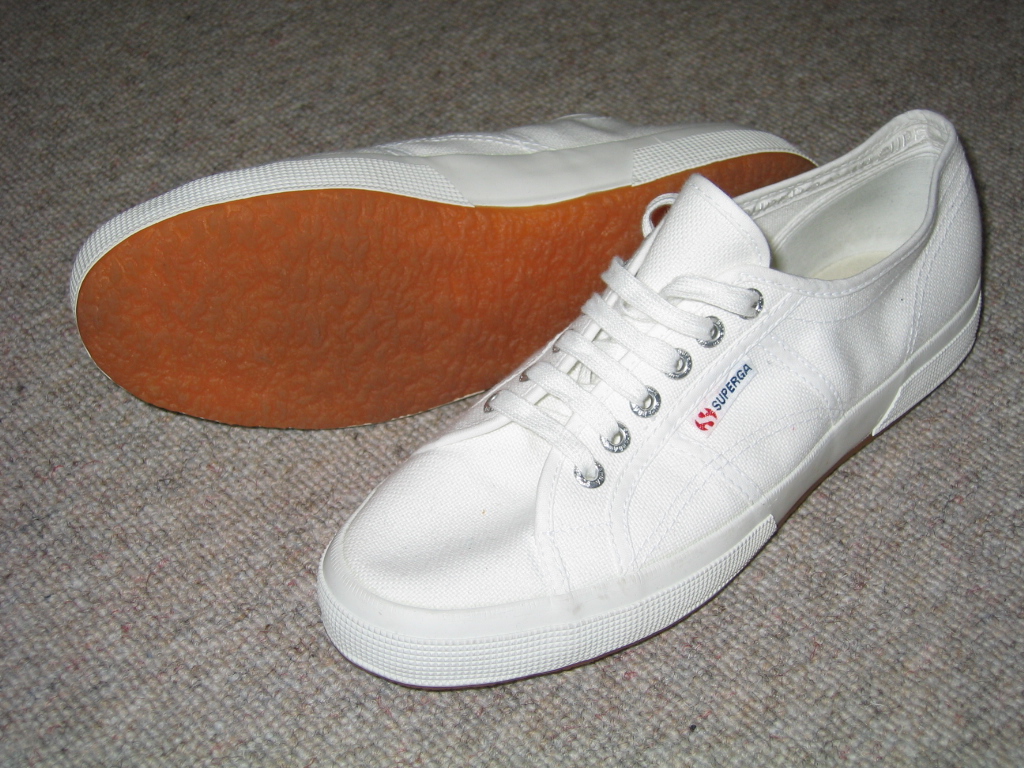
7. White Superga


Coleridge used the albatros to convey the damnation of the ancient mariner, Superga goes beyond the limits of modernity and introduces you to one of the worst breeds of humankind. Mandatory with chinos, white Supergas will take you out on a romantic date on their Porsche-shaped boat. Help yourself to some murder.

6. Toms


Or "the deceiving shoes". Always look down first, in order to avoid delusions. It's this summer's latest trend, and even the cool ones will eventually show up wearing them, one day. Unfortunately, hating Toms means hating the 80% of the population. Nevertheless, it will be helpful in the future. In the meanwhile, you can walk around with a cutter.

5. MBT or The Rocking Shoes


Or how I learned to stop standing and love kinetics. People wearing this incredible, ergonomic piece of contemporary art should not be avoided. Instead, whenever you see one of these rockers you should hug them. Turn yourself in a pro bono social worker and help them realise it's a trap, an ugly trap. It's karma. What goes around rocks around.

4. Timberland


Unless you're Bob the Builder. Even if you are. Red Lorry Yellow Lorry's album was Paint your wagon, not your shoes. It's too painful to write about these shoes, that colour is killing my eyes so I'll just move on.

3. Crocs


"I hate myself and I want to die" was written about this. I guess Kurt is now grinning at us. And I seriously hope this works. 

2. Mocassins


Usually worn by a demented person, the mocassin is unquestionably a sign of smartness and wealth (and I'm a serious person). The only solution to a sailing club addict is hiding in a yellow submarine because, although people use them on boats, there's no connection between the two of them. This is the logical reason for hating those who wear mocassins, with or without socks (you're hideous either way. There's nooo other waaaay.)

1. Hogan 


This is what made me lose faith in the Italian race. And emigrate. Regression and decadence of the postmodern era summarised in a shoe. Because yes, what you've despised for ages because it's orthopaedic now it's cool and what I'm wondering is whether all these designers we have nowadays will make any good to our environment and society. The answer is NO and I from now on I'm going to kill Hogan people to make human leather out of them.


 AND GIVE THE LEATHER TO GERMAN TOURISTS

Friday, August 10, 2012

Song for Bret Easton Ellis

I was sleepless last night, and restless I was looking for something to say, and somewhere to say it. Then I lost it.
But. Since I'm still eager to express a dead feeling, I will try to write it down.

I finished reading Less than Zero by Bret Easton Ellis yesterday.
It's Ellis's first work. Written in 1985 but as scary as a dystopian future, there's absolutely nothing relevant in the book. All that happens is winter holidays and a bunch of walking-dead people, spoiled and rich and famous and infamous. With an almost boring plot, it doesn't lead anywhere, you don't feel attached to the characters, no sympathy for the damned... But then, you get to recognise the main points. They make themselves visible.

The sign, the annihilation. Disappear Here.
The drugs. The syringe fills with blood.
The obsession for perfection. You're a beautiful boy and that's all that matters.
Money ruling over people. Wonder if he's for sale.
Depersonalisation. People are afraid to merge. To merge.

Ellis's talented writing uses these recurrent features to create the idea of the obsession for things. Things are what makes the world go round, what introduces a person to another. Just like Patrick Bateman's business card in American Psycho, the teenagers here are anticipated by their cars, shoes, drugs, partners. Recurrent is the sign Clay sees everyday, and every day he gets closer and closer to it; recurrent is sex, and the escape from it, until it becomes a torture porn movie; recurrent is the annihilation of every form of feeling.
This absence of feeling is probably the most disturbing feature in Ellis's work. As I mentioned before, you don't feel sympathy for the characters. But why? I reckon it's not about the plot, it's not about the lifestyle. It's about the process of depersonalisation Ellis uses with them. He is probably the one author that manages to depict a character and make it flat. Completely. No feelings. No heart. No soul, no point of view. Well, this is what the term 'alienation' stands for. People - well, characters - just hide behind their things, their drugs and habits. They don't coexist.
"No man's an island", Donne said. Here there are neither men nor islands. Here we have bottles and cupboards.
People are afraid to merge because they're bi-dimensional and they haven't been created with this merging function, they're not full-optional.
The only spark of hope, humanity and life is in those few paragraphs in italics. That's how it used to be; the spark is in the past, therefore it's gone. That's where our protagonist becomes human and three-dimensional, but that's just a dream-like sequence, you don't ever feel there's a way to escape.
In a situation where even time is subject to this inhuman shift, all that's left is nothing to lose, a deep digging down the elevator.

And as the elevator descends, passing the second floor, and the first floor, going even farther down, I realize that the money doesn't matter. That all that does is that I want to see the worst.

Wednesday, August 1, 2012

Blue skies are calling

Ahhh. I haven't been writing for a while.
It's quite odd to be back on this platform after several months, and after all the things that have changed. It's like a different place. With a bittersweet taste.
I left England on the 29th of June. I saw the last English dawn from a car window, while going to the airport. Then I realised that we would all be apart; what scared me at the time was that feeling of detachment--we've been there, we've done that; now we're back to where we 'belong'. It's not a trip, it's an experience and it's what we've created from scratch just to watch it vanish a few months later.
Back here is like a parallel universe, still good but sometimes you have those flashbacks and you get pathetic (yes, you do!).
And I am pathetic indeed, that's why I will stop here and stop listening to To Tundra. Maybe a decent blog entry next time?

We don't need a sign 
to know better times 
Ciao!

Monday, April 9, 2012

Lullabies for strangers


I grew up with the — probably wrong — idea that you can tell how good a writer is by how unfathomable his writing is and how complicated the story is.
The fact is—sometimes the little things that catch you the most are those ones which not lie on the surface, but those which quickly grin at you from the depth, and then escape. Those are usually simple hints, allusions, word collocations, mental pictures.
The writing is clear, almost pure—there's only you and the story you receive. Probably those are the books you read raising a smile, it's as if the writer hadn't chosen to show anything but the fact — and thus, himself. It creates a strong legacy between the two of you, and it may seem like I'm writing bullshit, but the point is not "hey, I want you to believe in the purity of writing and kill every form of experimentation" — not at all. I am just pleasantly surprised when an author I know can be/do pretty much everything.
I ended up thinking that, despite the surface, the pure, discreet writing that doesn't make you feel its presence is probably harder to obtain. I mean, I am so purely fascinated by Ulysses's mental trips, I adore the genius behind those witty thirteen-lines sentences in Infinite Jest but yes, you can create whatever you want out of the blue, but when you want to remember the heart of the writing you tend to pick those little, unveiling bits of truth that pose in front of you. And when a writer can't do that — he is a bad writer. It is so hard to be clear. Words fail us. Feelings escape. The sensation of that moment is not to be replied, but if you can reach an effect, a climax — you're there. You made it. This is why there are few people who can write purity.

I missed the coach, the other day. I was in the city centre already, not much else to do. Grey skies. I walked into Waterstone's and spent there one hour wander, then bumped into this short stories collection, How we are hungry by Dave Eggers. I've know him for a few years. I had a coffee, I read. I almost cried; those little incidents can cause a motion from the inside, they do, they do. There is not much to say — he says that. The rest is just the bond that stands between man — or living creature — and the nature, the environment. The bond melts, there is barely a slight difference or maybe there isn't. Every story craves for being read, and the odd thing is that you finish. You look at some point in the distance. You think. And so on.
What surprised me was that I expected Eggers to be part of the "hard side". You expect it more from short stories, they're tangled and obscure. But here there is some purity that almost makes you fear he's trying to break in your head. Big deal.
This simplicity/simpleness remined me of that other big author, the same who wrote the cited Infinite Jest—David Foster Wallace. Both of them are among the most talented of these times, and both showed their true self with short stories. I still remember how painful it was to read The planet Trillaphon as it stands in relation to the Bad Thing [here in case you want], in which he openly spoke about the disease that eventually killed him; that is what he wrote in 1984—that is what he wouldn't do again, better, and I'd dare saying that nobody has ever spoken about depression in those terms, with such a nerve. No interviews. No advertisements.

When you can work with the experimental and still keep your feet still, you're on the earth. You make things exist. You run.


«I thought we were all the same but as I was inside my dead body and looking into the murky river bottom I knew that some are wanting to run and some are afraid to run and maybe they are broken and are angry for it.»

Saturday, March 31, 2012

Eeny, meeny, miny, moe —


I never really understood

why

we run in circles but

we wait in lines


We say 5 feet tall

when — we all know

you're many times short


And what I hate about people

— and things, and even sensations —

is when they are irrelevant.


Are we wondering

or wandering?


Wednesday, March 28, 2012

The gig animal identikit


I've been to quite a few gigs and concerts, and yes, whether it is good or bad, big or just in a small venue, one thing is certain: when you get there, your "one gig stand" neighbours will be easily recognisable at first sight, and that definitely helps you get rid of them.

The fangirl
This is the most popular category. Usually a teenager, the fangirl is in the first row, she's been standing there since noon, she's wearing the band's t-shirt, she knows all the songs and does not spare your poor ear a single line, alternated only by hormonal deliveries on how hard she would bang the whole band — including the female vocalist, yeah, maybe she is also a bit unsure about her sexuality.
The subcategories of the fangirl are the elderly fangirl, who is usually in her husband's company, recalling her failed career as a pop singer, and the slutty fangirl, who's only wearing a bra and pushing you because «my friends are over there».

The giant mosher
Usually a man, he's a sweaty, dirty, hairy monster who easily has fun, although people are scared of him. The giant mosher comes in two categories: the stalking mosher is the bad guy who's drunk and seems to chase you because he apparently wants you dead; the good-hearted mosher is usually a huge, cute redhead that sees you (i.e. me) and says something like «you're so small, you're gonna be hurt, so I'm gonna protect you!»; this is my favourite category, because he moshes and protects you at the same time, letting you easily get to the second row.

The chatty drunk
Teenaging guys who share one brain for the whole bunch of them, the people in this category are very common. Probably they don't really like the band, they're just there because only one of them does. Thus, the rest of them dedicate themselves to hard-drinking and hard-annoying. Always talking for the sake of it, usually incomprehensible and nonsensical, they are sometimes part of the picking up subcategory, which witnesses them showing their charm and loving abilities to any living being with boobs. After the concert, the chatty drunk is always happy and lets everyone on Facebook know about it.

The guy with another band's t-shirt
This small but ever-present group is there to show how alternative they are. Always carrying a DSLR camera, they're not there for the concert, they're just live-tweeting an improvised review, which will be posted on tumblr straight after the concert. Along with a couple of blurry, photoshopped pictures.

The smelly
Usually part of the mosher category, their fake cotton t-shirts are over-worn; the surrounding noses are not helped by their involvement with the song, which forces them to raise their hands, as if they weren't already visible - and not only - enough.

The mother
Especially popular in the UK, the mother hates being there but she's been forced by the fact that her daugher was been given a ticket as a present for her 16th birthday. Bored and pissed, the mother eventually decides to annoy people, claiming that her spot must be wider, and complaining that everybody's pushing her. After the second song, the mother withdraws to the back of the standing area, leaving her daughter bitching around, because she doesn't want to follow her. That, obviously, was the daughter's first though when she took the mother to the second row.

The couple
Very common and rather annoying, the couple is usually a double-sized mosher preventing everyone from moving; the couple - that we will here consider as a single element - is surrounded by disgusted people who went there to see another show. It is a sugary being that dances and kisses at the same pace all night long. For the couple, every song is a love song, although the male part is often the bored one, the one who would be a mosher, if only she weren't there...